
2021-06-05
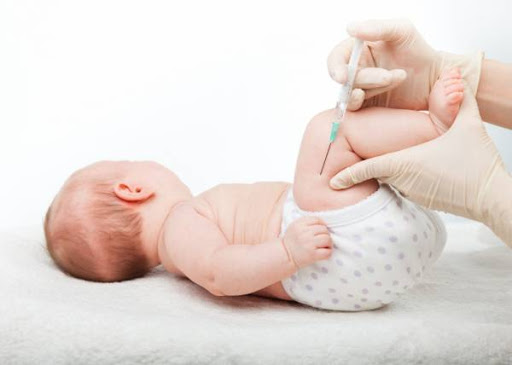
The Balearic Vaccine Guide from 0 to 14 years old
Information written by Mª Antònia Barceló, Pediatric Nurse in Primary Care in Mallorca. Master in general nursing care, expert in child nutrition, and Master in education and health promotion. This publication is for informational purposes and you should always consult with your pediatrician.
Hello Koala family! As you may have already seen, more and more “new” vaccines are coming out and it is becoming more and more difficult to know how many there are, what each one is for, and reasonable doubts arise: does my little one need them? Do you have to put them or not? pursaklı escort
Therefore, today I bring you this post to shed a little light on the matter and be able to clarify all your doubts. I warn you that curves are coming … welcome to the wonderful world of vaccines!
An initial note: right now in Spain there is no vaccine MANDATORY , all vaccines on the vaccination schedule are recommended. Although obviously it goes without saying that vaccines actually prevent disease and we have a lot of data and studies to back it up. So we can say without disheveled that vaccines SAVE LIVES !!!!!
To do this, I will focus on the vaccination calendar of the Balearic Islands, the differences with other communities are minimal.
Vaccination calendar of the Balearic Islands
Now that we know the current calendar in use and the ages at which the vaccines are applied, I am going to explain a little what each one is for.
As its name suggests, it is a vaccine that prevents against six different bacterial diseases.
Tetanus: It is a disease that affects the nervous level, causing muscle spasms, stiffness and instability, so it is a emergency , since it can paralyze the muscles even those involved in breathing.
Diphtheria: It is a serious respiratory disease that causes respiratory distress, and can even cause death.
Whooping cough: A persistent and uncontrollable cough develops that can compromise breathing, causing suffocation. The most typical complications occur at the nervous and heart level. With the anti-vaccine movement, pertussis infection rates increased in such a way that cases were detected before 2 months of life (which is when the first vaccine is received), for this reason pregnant women began to be vaccinated in the final stretch pregnancy, so the first vaccine babies receive is the one given to the mother.
Hepatitis B: Of all the types of hepatitis, this is the most dangerous, since it causes inflammation of the liver that can lead to cirrhosis, cancer and subsequent death due to its malfunction.
Haemophilus influenzae B: This bacterium can cause multiple diseases, among the most important, meningitis or epiglottitis (infection of the epiglottis that causes obstruction or closure of the trachea).
Poliomyelitis: It produces paralysis and muscular atrophy, to the point that it can paralyze the diaphragm and therefore cause suffocation. Fortunately, thanks to vaccination, it is a practically eradicated disease.
Pneumococcus is the bacteria responsible for most pneumonia in children under 5 years of age and other less serious ailments such as recurrent sinusitis or otitis.
It is also responsible for some types of meningitis.
Meningococcal C vaccine
As its name suggests, meningococcus is responsible for bacterial meningitis, which can cause devastating sequelae (limb amputations, paralysis …) or even death.
As well as septicemia (infection of the blood) with the severity that this supposes.
It was one of the most prevalent serogroups in Spain some two decades ago, although since vaccination began its rate of infection and disease has decreased considerably, giving way to other serogroups that I will talk about later. In addition, it must also be borne in mind that this vaccine produces community immunity or, what is the same, vaccinating a child also protects others. For this reason, individual immunization of each child should not be ruled out, in this way they will be doubly protected.
MMR vaccine
This vaccine covers three viral diseases. All of them are usually transmitted through microdroplets that we expel with our breath or cough, as well as with the contact of dirty hands. It is the same contagion mechanism that the influenza virus uses, hence the importance of carrying out adequate and constant hand washing when suffering from one of these diseases, as well as some isolation of the sick person from other healthy or more vulnerable ones ( babies, elderly …)
Measles: one of the exanthematic diseases par excellence, which by itself only causes an intense rash on the skin and high fever, but complications can range from lung inflammation, making it difficult to breathe, to meningitis, with the risks that this entails. In the last year, the state of epidemic has been declared in several European countries, given the low vaccination rate, which is why the law has been modified in some countries to make vaccination MANDATORY and thus avoid deaths caused by this disease.
Rubella: Thanks to vaccination there are very few cases of this disease and in children they barely show symptoms, whereas in adulthood it causes general malaise, high fever and severe headache. The biggest problem that can occur is if you get rubella during pregnancy, since congenital rubella can be serious for the baby.
Mumps: This virus causes a painful inflammation of the salivary glands, in relation to this, fever, severe headache, difficulty chewing may appear, although serious complications occur in men, where testicular inflammation and pain and testicular tumor can appear, which finally it can end up causing sterility.
Chickenpox vaccine
Perhaps chickenpox is one of the best known diseases and one of the great myths about diseases par excellence weighs on it: “ that, it is better to spend it “ . Nothing could be further from the truth.
Chickenpox has multiple complications that can be very serious such as: pneumonia, heart infection, joint inflammation or cerebellar ataxia (the gait of the affected person is very unstable).
With the start of vaccination, the infection rate has greatly decreased and if it is suffered, it is much milder and with fewer health risks.
Human Papillomavirus (HPV) Vaccine
Different hoaxes have been thrown about this vaccine that have caused a part of the population to refuse to administer it to their daughters, but the data speak for themselves and the side effects that can occur are the same as with the rest of vaccines.
HPV has been shown to be the cause of 99% of cases of cervical cancer, 70% of anal cancer, and 40% of vulvar and vaginal cancer. So we are talking about something very serious for the future health of women especially, hence it is those who are vaccinated. Although they are beginning to have data on vaccination in boys that show a significant reduction in contagion, since they are the ones who transmit the virus and suffer less from the disease. Even the latest studies express that it seems that it could also be related, in the long term, to penile cancer.
Among other risks, in both sexes, is mouth and throat cancer.
The usual side effects of the vaccine are: local pain and redness and mild fever, sometimes it can cause fainting or fainting from which they recover quickly.
It should be noted that the vaccine obviously works, but we must not forget that the best way to avoid the transmission of the virus is to provide our adolescents with good sex education and encourage the use of condoms, regardless of whether they have received the vaccine or not.
ACWY meningitis vaccine
This vaccine has been added in the last calendar update in 2019 at 12 years of age.
As the name suggests, this vaccine protects against 4 serogroups (types) of meningitis: A, C, W and Y. Since these last two have presented an increase in the number of cases, as shown in the graph.
On the other hand, there are several vaccines that are recommended but are not funded in our community, so if you decide to administer them to your little ones, you must pay for them 100%.
In any case, for all of them we will need a prescription to be able to buy them in the pharmacy, therefore, as soon as they recommend them in the consultation, if you want to put them, ask for the prescription. In some pharmacies they still don’t ask for them, but just in case it is better to request it.
At this time the following are recommended: vaccine for Rotavirus and Meningitis B.
Rotavirus vaccine
Rotavirus is a virus, as its name indicates, that affects the intestinal level and causes very intense gastroenteritis in terms of vomiting, diarrhea and fever that, as we know in children, especially babies (less than one year old that is in the age at which it affects the most), they can become dehydrated very easily.
For this virus we have two vaccines on the market, in this case they are oral vaccines, therefore they are not punctured.
Rotateq ®️ this vaccine covers 5 serogroups or types of the virus. For immunity to be correct, it is important to start the vaccination before 12 weeks of age and finish it before 32. Of this vaccine, 3 doses are administered in total and it is usually recommended to do it at 2, 4 and 6 months to meet the deadlines. This has a cost of about € 70 each dose.
Rotarix ®️ covers 1 serogroup of the virus. In this case, the intervals are slightly different, from 6 weeks of age and the second dose before 24 weeks, but in the same way as the previous one, it is recommended at 2 and 4 months, since this is only two dose. Its cost is about € 96 each.
If we revisit the previous graph on cases of menngitis, it can be seen that serogroup B cases without systematic vaccination have reduced the cases by half in the last decade. And, on the other hand, the cases of meningitis Y and W have practically quintupled, hence their incorporation into the systematic calendar and that it has not been decided to add type B meningitis.
Meningitis B vaccine
Of this vaccine, Bexsero®️ (from 2 months of life) and Trumenba®️ (from 10 years old) are marketed.
It should be noted that these vaccines do not cover all subgroups of serogroup B, and exact data on how long the immunity creates is not yet available, but early studies indicate that protection lasts for a very short time. In addition to the fact that it does not create community immunity, reasons why it is not considering introducing it in the vaccination calendar
It must also be taken into account, as I have commented above, that in the last decade the cases of B have decreased significantly, giving way to other more present serogroups.The most common side effects related to this vaccine are: high fever and local pain or discomfort that can last for weeks.
Both vaccines are around € 110 each dose, which depend on the age of initiation of the vaccination. From 2 months there are 4 total doses; at 3 months, 3 total doses; and from 2 years, 2 doses.
In any case, for unfunded vaccines it is better to consult with your pediatric team, since risk groups must always be taken into account and each case studied individually.
Finally tell you that, although calendar changes are many and constant, they are always due to the most recent and reliable epidemiological studies, so we should not mistrust them and we must always take them into account since it is in the good of our lives. children and the general population.
I hope this post has helped you to get to know the universe of vaccines a little better and more thoroughly. As you know, if you have any doubts left in the pipeline, do not hesitate to ask me below in the comments, I will be happy to answer you. Greetings and cheers to all the Koalas!
Sources consulted: