
2026-11-23
Temper Tantrums in 2-Year-Olds: Why They Happen and How to Handle Them
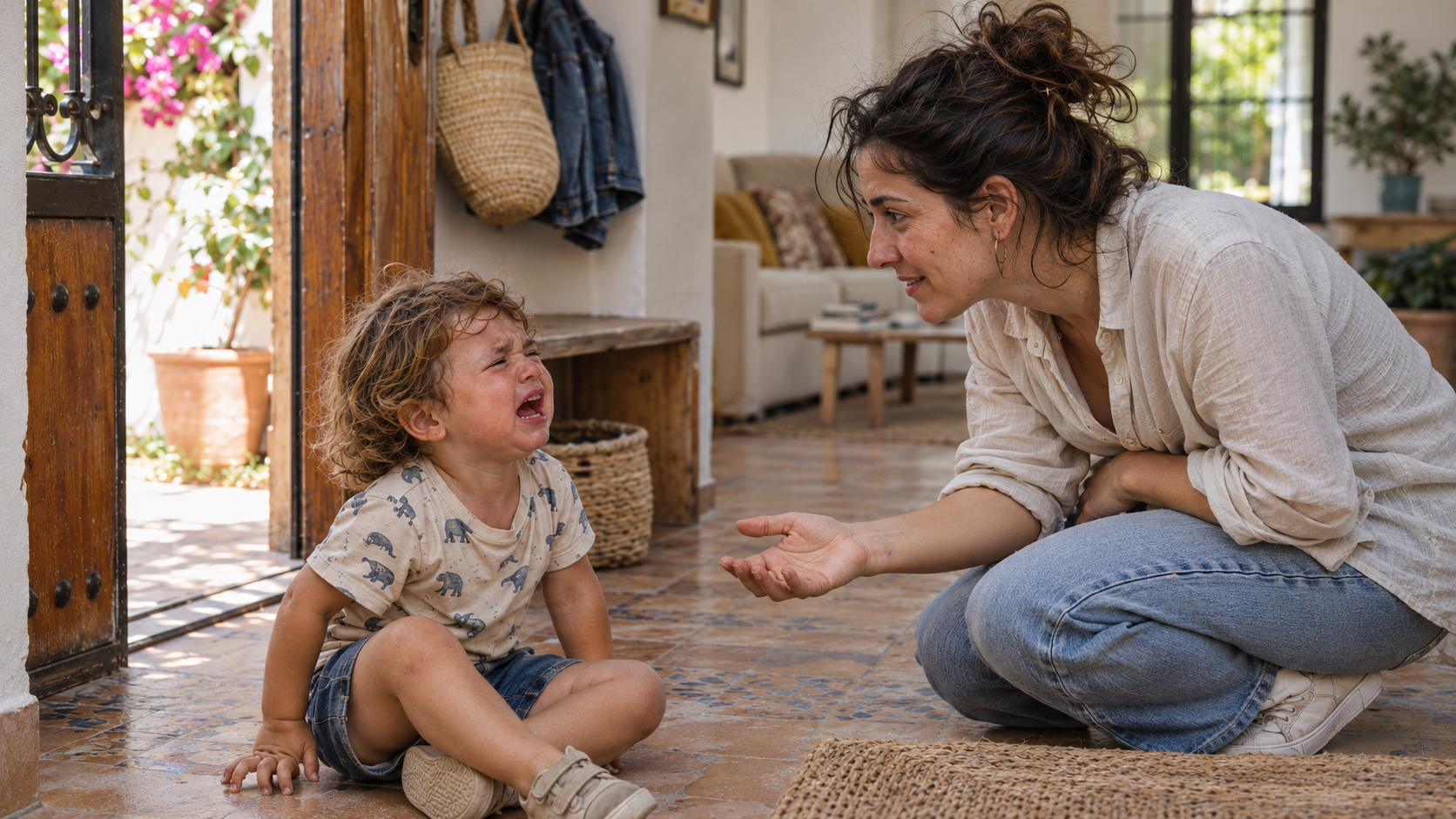
Does your 2-year-old throw themselves on the floor because they don't want to leave the playground, scream when you say no, or burst into tears over something seemingly insignificant? Although it can be exhausting, temper tantrums in 2-year-olds are a completely normal part of their emotional development.
At this age, little ones are beginning to discover their independence, but they are still learning how to manage frustration. Understanding what they are going through and knowing how to support them can turn these tense moments into valuable learning opportunities.
Why do 2-year-olds have so many tantrums?
Between 18 months and 3 years old, toddlers go through a phase of massive changes. They want to make decisions, explore, and do things all by themselves, but they don't yet have the tools to express everything they feel.
Tantrums usually happen for three main reasons:
- A desire for independence: they want to do everything on their own and feel deeply frustrated when they can't.
- Difficulty expressing emotions: they feel anger, sadness, or helplessness, but they don't yet know how to communicate or regulate these feelings.
- Physical or emotional needs: hunger, fatigue, overstimulation, or unexpected changes can intensify their reactions.
A tantrum doesn't necessarily mean a child is disobedient or misbehaved. Most of the time, it is simply the expression of an emotion they don't know how to handle yet.
And here is the good news: as their language develops and they learn to regulate their emotions, tantrums usually become less frequent.
How to manage tantrums in a 2-year-old: 5 practical steps
When a child is emotionally overwhelmed, trying to reason with them or giving long explanations is rarely effective. First, they need to regain their calm.
1. Stay calm, even when it's hard
Your reaction directly influences how your child experiences the situation. If you respond by yelling, the tension will only escalate.
Take a breath, lower your tone of voice, and avoid getting drawn into a power struggle. You don't need to find an immediate solution right this second.
What you can say: "I see you're feeling really angry. I'm right here with you."
2. Validate the emotion, but hold the boundary
Respectful parenting doesn't mean allowing everything. Your child has every right to feel upset because they can't have their way, but that doesn't mean you should give in.
For example, if they want to keep playing when it's time to leave:
"I know you want to stay at the park. You're having so much fun. But now it's time to go home."
You are acknowledging their feelings without changing a necessary decision.
3. Be there without forcing it
Some children crave a hug when they feel frustrated; others need a few minutes of personal space.
Get down to their eye level, stay close by, and offer gentle physical contact if they welcome it. There's no need to force a hug or demand that they stop crying immediately.
The goal isn't to stop them from feeling angry, but to help them move through the emotion safely.
4. If they hit, bite, or throw things, step in
Feeling anger is valid; hurting others is not.
If your child hits during a tantrum, calmly stop the behaviour, move dangerous objects out of reach, and protect everyone involved.
You can say: "I understand you're angry, but I won't let you hit."
Avoid responding with smacking, threats, or physical punishment.
5. Talk about what happened once they are calm
Once the storm has passed, that's the moment to help them make sense of what happened.
Keep your sentences short: "You felt upset earlier because you wanted that toy. Next time, you can ask me for help."
You don't need to turn every single episode into a major lecture. At this age, brief, loving conversations and positive adult role modelling teach far more than any sermon.
How to prevent tantrums before they start
While you can't prevent every single one, certain everyday habits can help reduce their frequency and intensity.
| Common situation | What you can do |
|---|---|
| Doesn't want to leave the playground | Give plenty of warning: "After two more goes on the slide, we're heading home." |
| Gets upset when getting dressed | Offer two real choices: "Do you want the blue shirt or the green one?" |
| Meltdowns at the end of the day | Check if they need a rest, a snack, or some quiet downtime. |
| Frustrated when they can't do something | Give them time to try before stepping in to help. |
| Unsettled by changes in routine | Walk them through what's going to happen beforehand, using simple words. |
In Montessori education, special emphasis is placed on independence and a prepared environment. Allowing your child to take part in small decisions and complete age-appropriate tasks can prevent frustration and nurture their self-confidence.
A simple tip: over the next few days, observe when tantrums tend to happen. You might notice a pattern—right before dinner, when leaving nursery, or when it's time to turn off the TV—which will allow you to stay one step ahead.
Frequently asked questions about tantrums at age 2
Is it normal for my 2-year-old to have tantrums every single day?
Yes, it can be completely normal. Some children have daily tantrums during this phase, while others have far fewer. Frequency alone doesn't mean there's a problem: what also matters is their intensity, how long they last, and how your child is doing between episodes.
How long does a normal tantrum last?
Most tantrums last just a few minutes, although some can go on longer. If they are consistently very long, intense, or exceptionally difficult to manage, it's a good idea to discuss it with your paediatrician.
Should I ignore a tantrum so it doesn't happen again?
There is no need to ignore your child or leave them alone. You can avoid reinforcing the behaviour—such as giving in to a demand just to stop the screaming—while still remaining available to support them through their feelings. Their emotion deserves your loving presence, even when the boundary stays firmly in place.
When should I be concerned about tantrums?
Talk to your paediatrician if tantrums lead to self-harm or injury to others, are regularly very prolonged or intense, are getting noticeably worse, or are significantly disrupting family and social life.
It's also worth seeking advice if you notice significant communication difficulties, a loss of previously acquired skills, or any other developmental concerns.
Asking for professional guidance doesn't mean there's a disorder—it's simply about getting the right support.
Tantrums are also an opportunity to learn
Children aren't born knowing how to manage frustration. They learn step by step, through their own experiences and, above all, through the warm guidance of the adults around them.
At Escoleta Koala, in Palma de Mallorca, we believe in early childhood education that respects each child's natural pace, encourages their independence, and nurtures their emotional well-being.
Guided by our Montessori and systemic approach, we understand that educating isn't about eliminating difficult emotions, but about providing the security, boundaries, and tools children need to learn to navigate them.
Remember: your child doesn't need you to calm them down instantly every time. They just need to know they can count on you, even when they're angry.
Would you like to learn more about our educational project for children aged 0 to 3? [Discover Escoleta Koala and book a visit](https://escoletakoala.es/contacto/).
---
Further reading: [American Academy of Pediatrics — Temper Tantrums](https://www.healthychildren.org/English/family-life/family-dynamics/communication-discipline/Pages/temper-tantrums.aspx), [NHS — Help your toddler with their emotions](https://www.nhs.uk/best-start-in-life/toddler/help-your-toddler-with-their-emotions/), and [CDC — Managing Emotions](https://www.cdc.gov/parenting-toddlers/noticing-and-naming/managing-emotions.html).